March's dawn coincided with the outbreak of hostilities in the Middle East, with joint airstrikes by the United States and Israel on Iran followed by retaliatory Iranian strikes throughout the region and the closure of the Strait of Hormuz. The conflict had some immediate effects on the business travel industry beyond attacks on travel infrastructure like airports and hotels and travel buyers' scramble to evacuate travelers from the area. The most notable was the sharp increase in oil prices, leading to commensurate increases in airfares and surcharges.
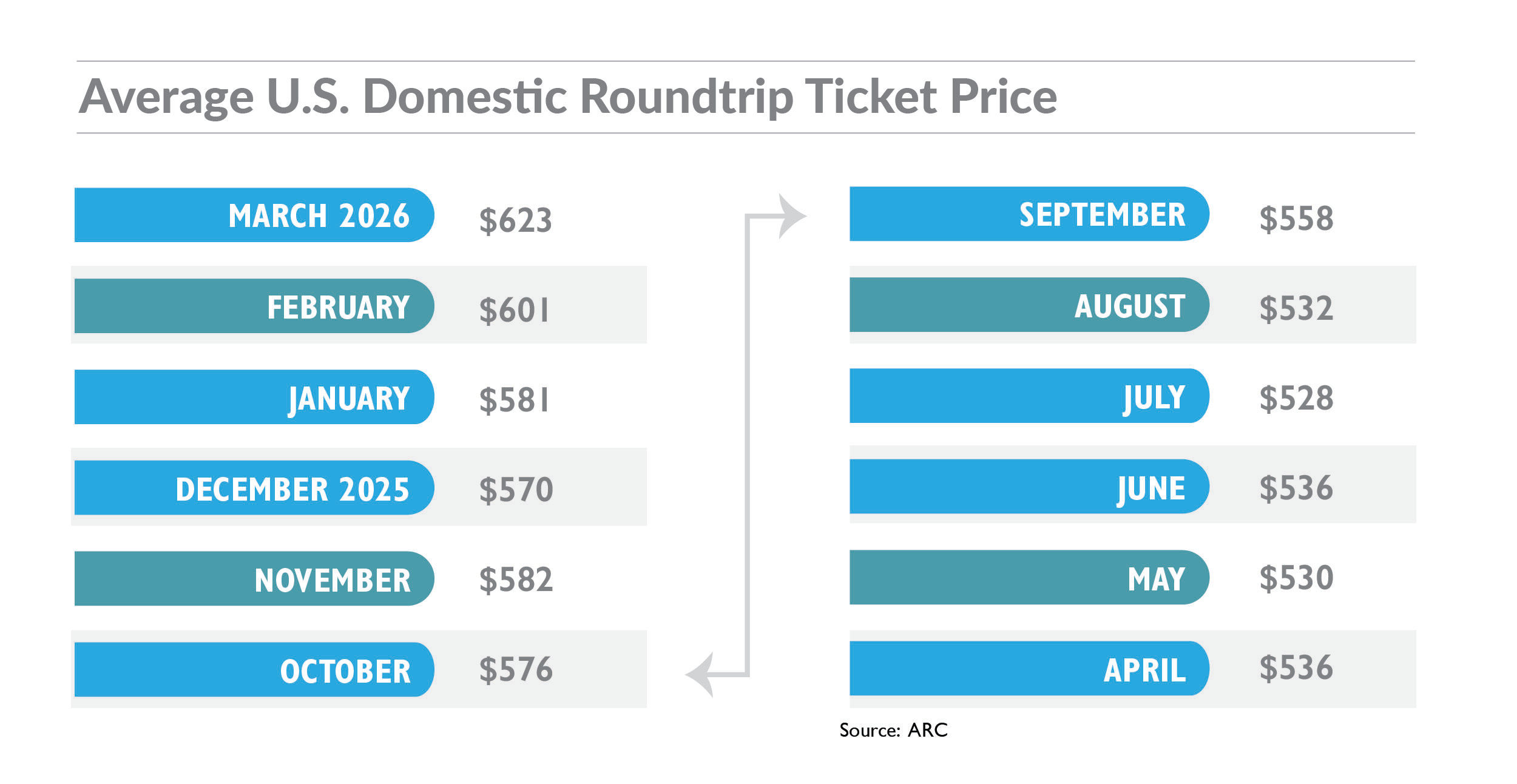
The average price for a U.S. domestic roundtrip ticket in March increased 16 percent year over year to $623, according to Airlines Reporting Corp., the highest such figure since May 2022. ¸ The average price for an economy-class ticket increased 21 percent to $570 and for an average premium-class ticket increased 17 percent to $1,444.
Fares alone weren't carriers' only outlet to counter rising jet fuel prices: Several hiked existing or levied new fuel surcharges outside fares themselves. Notoriously difficult for corporates to negotiate, the surcharges can be substantial particularly on international flights.
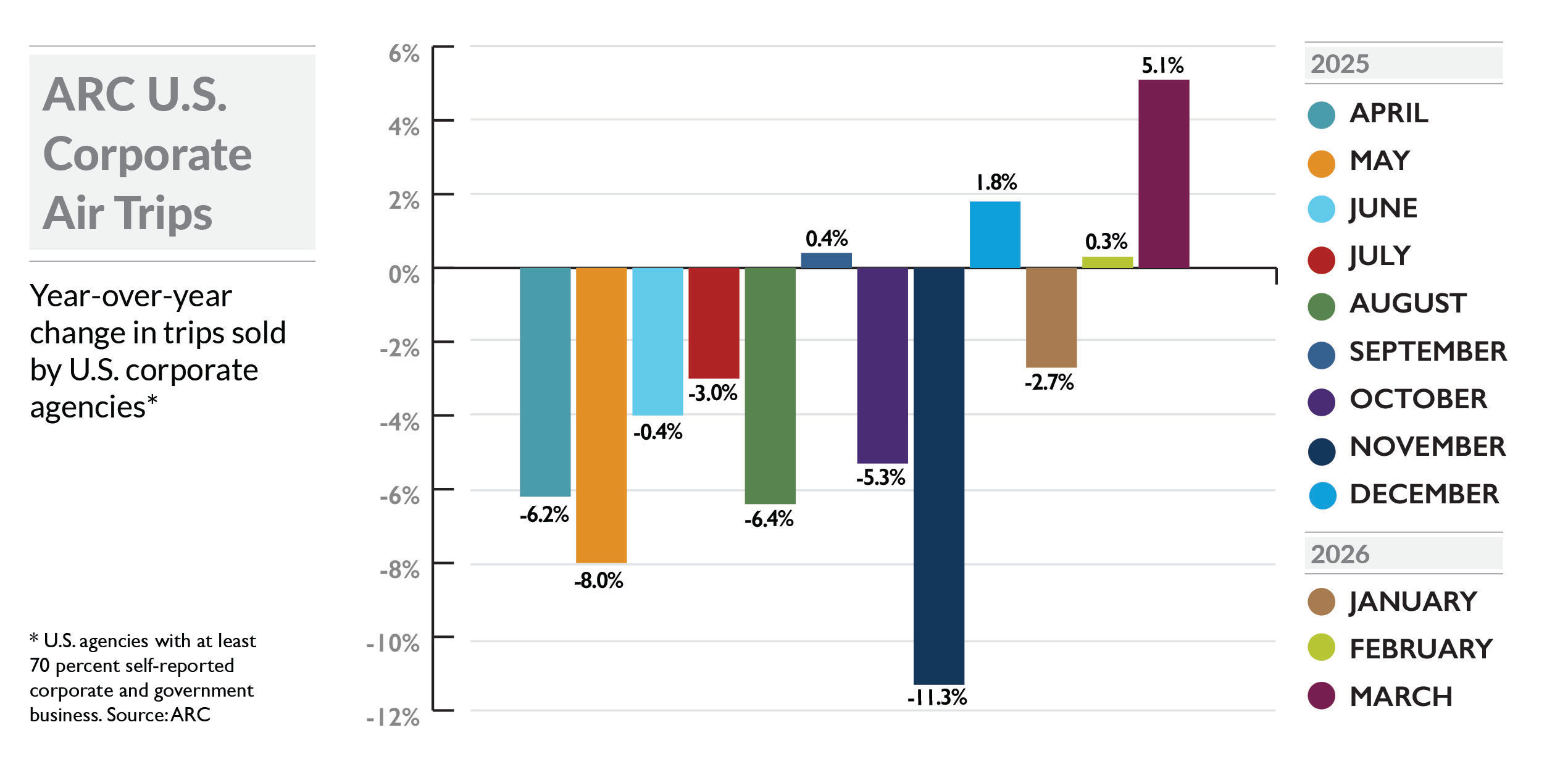
Unlike some historical international conflicts and sharp oil price increases, there was little evidence of an immediately notable decrease in business travel demand. On the contrary, the number of air tickets sold in March by U.S. corporate travel agencies and settled by ARC increased more than 5 percent, the largest increase since December 2024 and only fourth such monthly increase since then.
"The passenger growth we've seen this month and quarter suggests travelers are actively planning around geopolitical uncertainty rather than pulling back on air travel," ARC chief commercial officer Steve Solomon said in a statement.
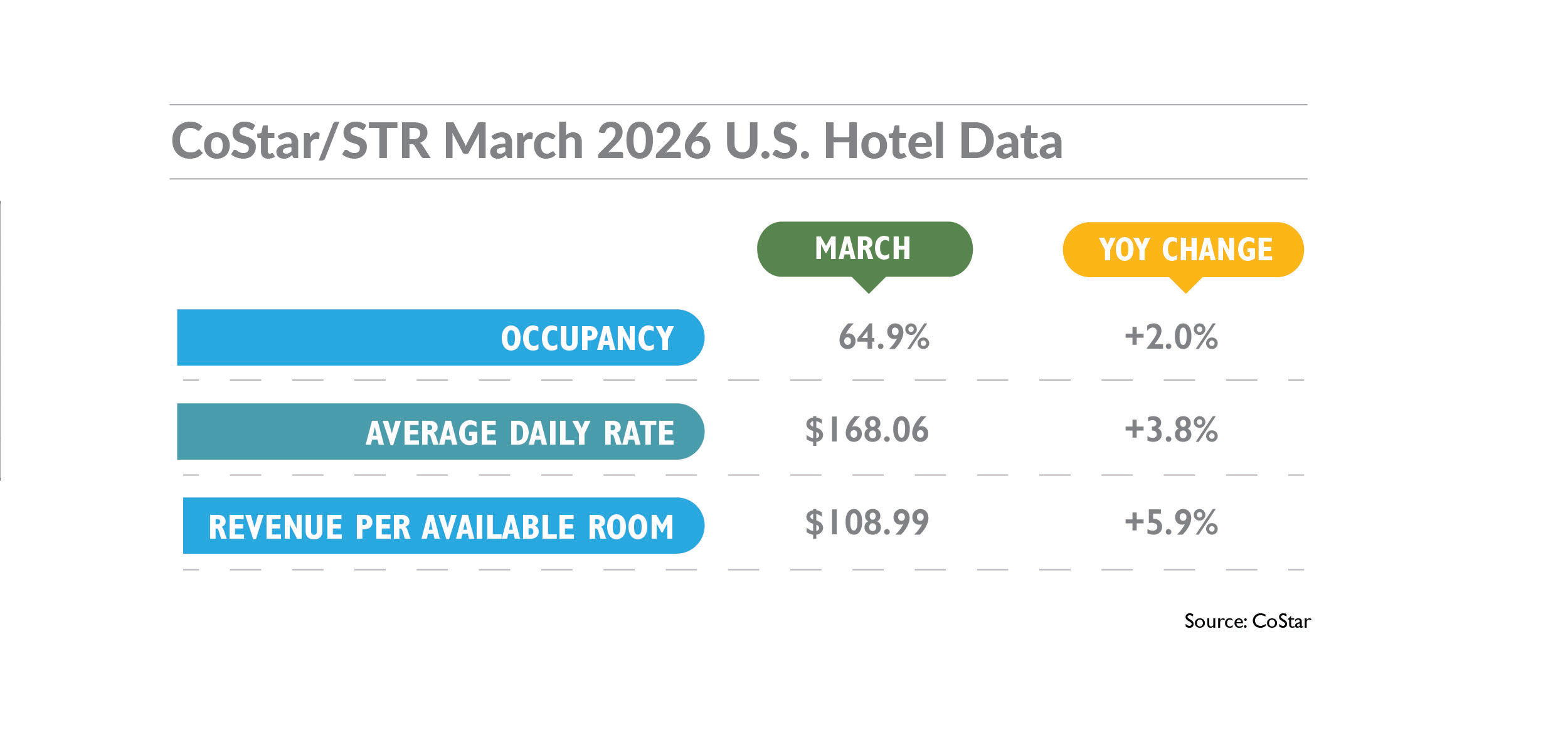
U.S. hotels too posted some of their strongest year-over-year growth figures since 2024, according to STR hospitality data from Costar. U.S. occupancy increased 2 percent year over yearto 64.9 percent, the second straight month of increase after 11 straight months of decline.
Average daily rate and revenue per available room did likewise, each increasing year over year. It was the third consecutive month that RevPAR increased from prior-year levels after nine months of decline.
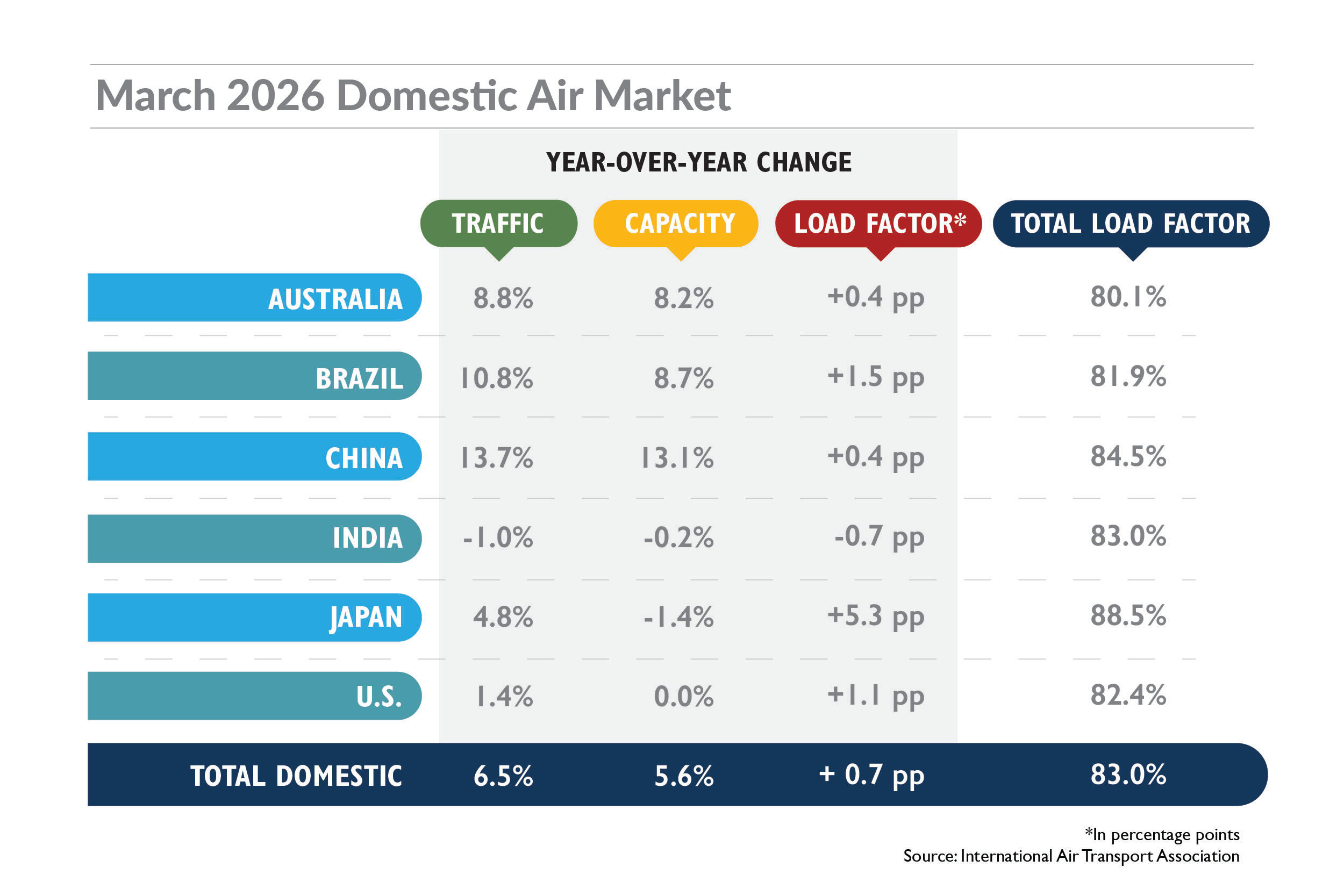
Domestic air demand increased in most sectors of the world, outside of India. March domestic demand, as measured in revenue passenger kilometers, increased 6.5 percent year over year, while capacity, as measured in available seat kilometers rose 5.6 percent, according to the International Air Transport Association. Load factor was up 0.7 percentage points to 83 percent.
In the U.S., demand increased 1.4 percent even as capacity held steady, leading to a jump in load factors.
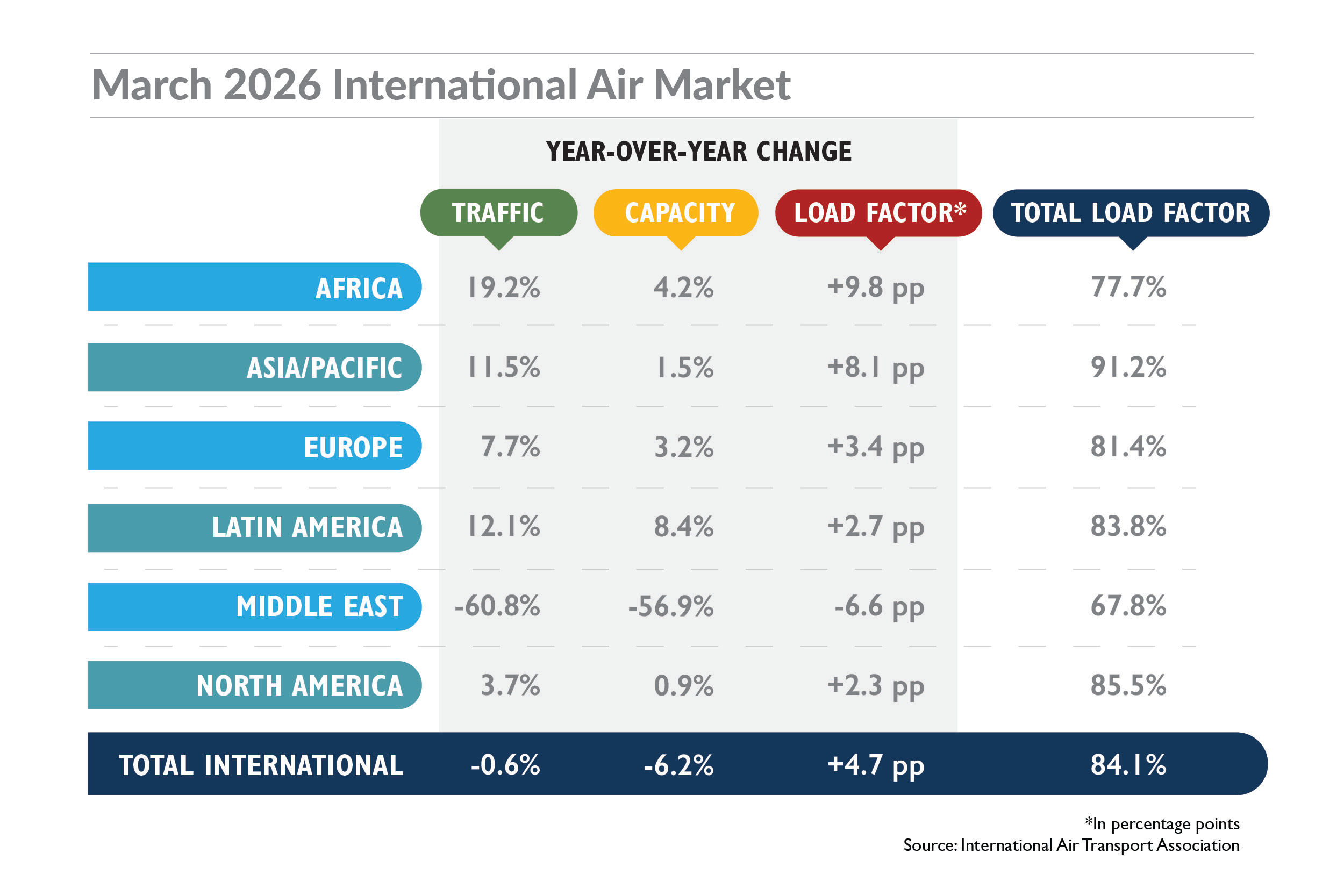
The most notable effect of the conflict was on airline capacity in the Middle East. Such capacity by carriers in the region plummeted nearly 57 percent year over year, according to IATA, and airlines throughout the world limited their flights to the region. International Middle Eastern traffic dropped more than 60 percent, according to IATA.
Outside of the Middle East, total demand increased 8 percent for the period, according to IATA.
"Everybody's watching what's happening with jet fuel—both supply and pricing," IATA director general Willie Walsh said in a statement. "On the supply side, over the next months we could see shortages in parts of the world with high dependence on supplies from the Gulf, especially in Asia and Europe. And the extraordinarily high cost of jet fuel is increasingly being reflected in ticket prices. While this has not impacted March traffic or forward bookings to date, it remains to be seen at what point high prices could start to shift passenger behavior."